

Best Visual Audio Devices in 2026
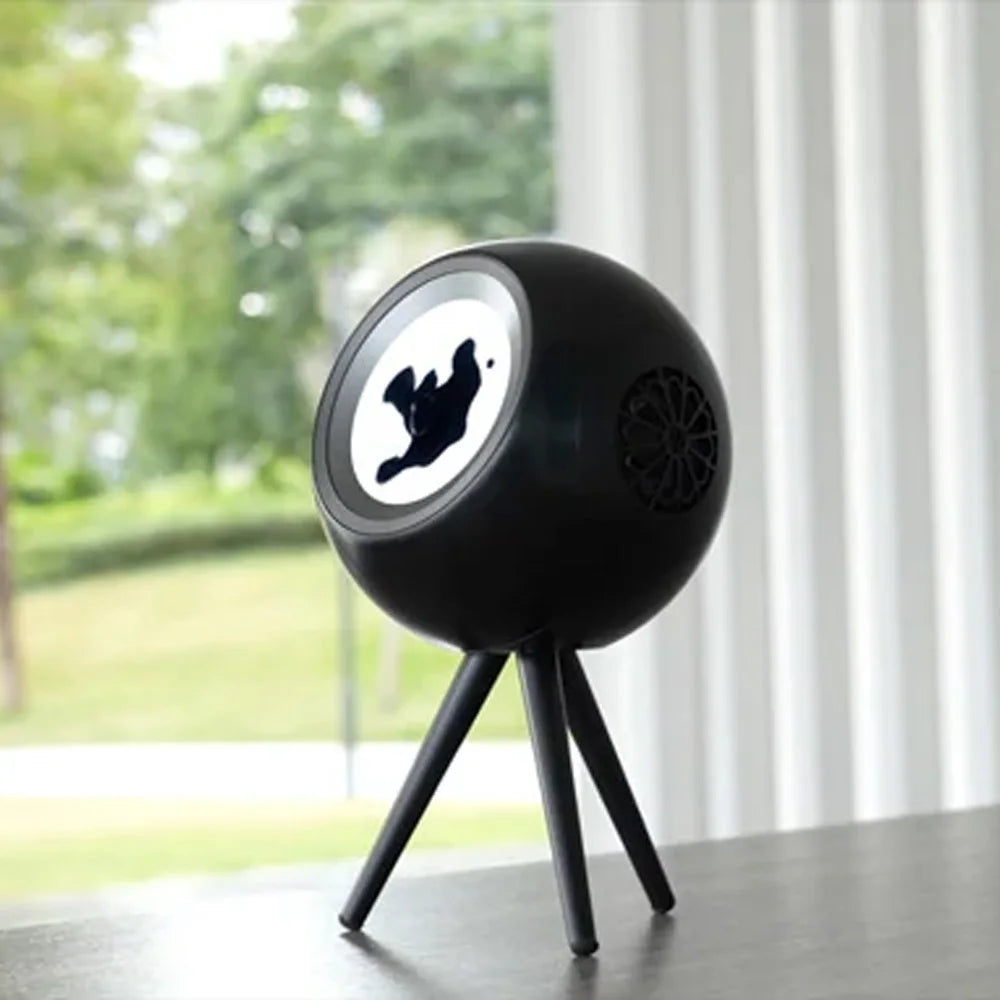
Best Visual Audio Devices: Speakers You Can Actually Watch
Music is meant to be heard. But what if it could also be seen — not through pre-programmed LEDs or digital animation, but through real physics happening live in a sealed glass chamber? That's the promise of the ferrofluid sound visualizer.

What is a Visual Audio Device?
A visual audio device is any speaker or audio system that creates a visible output in response to sound. Rather than audio being purely an auditory experience, visual audio devices add a second sensory dimension — making music something you can see as well as hear.
The category spans a wide range of approaches: LED rings that pulse to beat, laser projectors that create patterns in smoke, oscilloscope waveform displays, and — at the highest tier — genuine ferrofluid visualizers that use real magnetic fluid to respond physically to electromagnetic signals derived from music.
The key distinction within the category is between approximated and authentic visual response. Approximated systems (most LED speakers) use pre-programmed patterns that loosely correlate with audio. Authentic systems — specifically ferrofluid — use the music's actual frequency content to drive a physical, unprogrammable visual event.
Why this matters: An approximated LED pattern looks the same on every song. A ferrofluid display like the one in the Glowbe by XELLO is driven by real physics — making every song, every moment, every track a completely unique visual experience. Music has never been more watchable.
Types of Visual Speakers: LED vs Laser vs Ferrofluid
Understanding the differences between these three approaches makes buying decisions straightforward. Each has a distinct mechanism, a distinct experience, and a distinct place in the market.
How Ferrofluid Sound Visualization Works vs LED Approximation
The mechanism behind ferrofluid visualization is fundamentally different from any LED-based system. Understanding this gap explains why no LED speaker — regardless of how sophisticated its programming — can replicate what a ferrofluid music visualizer does.
The Ferrofluid Signal Chain
In the Glowbe, the process operates like this: music plays → the built-in omnidirectional microphone captures the live frequency content → DSP converts it to electromagnetic pulses in under 1ms → the electromagnet applies a field to the Smart NanoFluid™ → the fluid responds via the Rosensweig instability, forming spikes, ridges, and wave patterns uniquely determined by the current frequency content.
This is sometimes called a ferrofluid audio visualizer or ferrofluid music visualizer — because the fluid literally visualizes the music's physical characteristics in real time. The result is not an animation. It is physics.
Frequency-Specific Visual Response
Each frequency band creates a visually distinct behavior. No LED system can replicate this without physical matter.
By comparison, an LED visual speaker works like this: the device measures overall volume (sometimes beat frequency) → looks up a pre-defined LED pattern for that intensity → displays that pattern. The relationship between the music and the display is approximate and predetermined. The same LED pattern will appear for the same volume regardless of whether you're playing jazz, heavy metal, or a movie soundtrack.
A ferrofluid audio visualizer has no stored patterns to look up. The fluid physically cannot produce the same result twice in succession — its behavior is governed by real electromagnetic physics, not conditional logic or lookup tables.

Bluetooth Speaker With Lights vs Real Ferrofluid Display — What Changes
The phrase "bluetooth speaker with lights" covers a huge range of products. Here's an honest side-by-side of what each category actually provides in a real listening environment.
Bluetooth Speaker With Lights (LED)
Glowbe Ferrofluid Display
Best Visual Speakers for Different Use Cases
The Glowbe Ferrofluid Speaker works across a range of environments and use cases. Here's how it performs in the most common settings where visual audio devices are used.
Invented by NASA. Perfected for Your Music.
Ferrofluid was created in 1963 by NASA scientist Stephen Papell to control rocket fuel in zero gravity — using the same Rosensweig instability that makes the Glowbe's display possible. The same fluid used in over 100 million speakers worldwide now makes music visible in your home.
Why the Glowbe Leads the Visual Audio Category
There are ferrofluid products on the market, and there are ferrofluid speakers. The Glowbe sits firmly in the latter — and it leads the category because XELLO Technologies built both sides of the equation to the same standard: real fluid science and real audio performance.

What's Included with the Glowbe
Every Glowbe Ferrofluid Speaker ships with everything needed for immediate use. No additional purchases required.
Real Reactions from Real Listeners
Frequently Asked Questions
A Speaker That Turns Music Into Living Art
The Glowbe Ferrofluid Speaker by XELLO Technologies. Real Smart NanoFluid™ display. 20W DSP audio. Bluetooth 5.3. Ships free from California in 3–7 business days.
Explore the Glowbe Ferrofluid Speaker →
Best Ferrofluid Speakers in 2026
Best Gifts for Tech Lovers in 2026
Articles connexes

Luxury Office Accessories Worth the Price in 2026

Aesthetic Bluetooth Speakers 2026

Best Bedroom Gadgets and Aesthetic Tech 2026

Gaming Room Decor & Desk Accessories 2026

Unique Home Office Gadgets Worth Buying in 2026

Desk Gadgets That Start Conversations in 2026

Office Gifts People Actually Keep
