
How Ferrofluid Works in Speakers — Audio Engineering Explained
Ferrofluid is used in over 100 million speakers worldwide — completely invisibly. The Glowbe changes everything by making it the star of the show. Here's the complete engineering story.

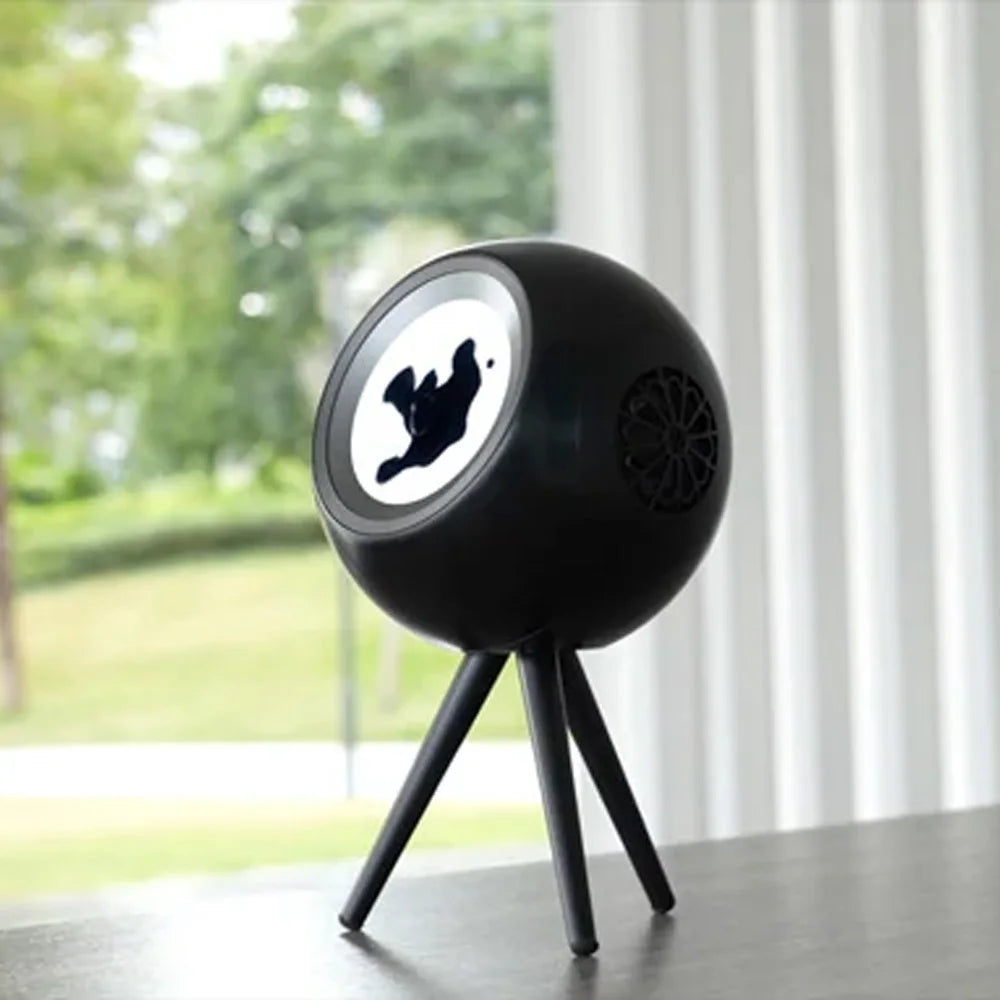

Almost everything you own that produces sound — your headphones, your home theater system, your earbuds, your studio monitors — almost certainly contains ferrofluid. It's been standard practice in speaker engineering since the 1970s. And yet the vast majority of people who enjoy high-quality audio have never heard of it. The Glowbe Ferrofluid Speaker by XELLO changes that narrative fundamentally: it makes ferrofluid the most visible, most celebrated, most central element of the product rather than hiding it inside the mechanism. This is the complete engineering story of how that works.
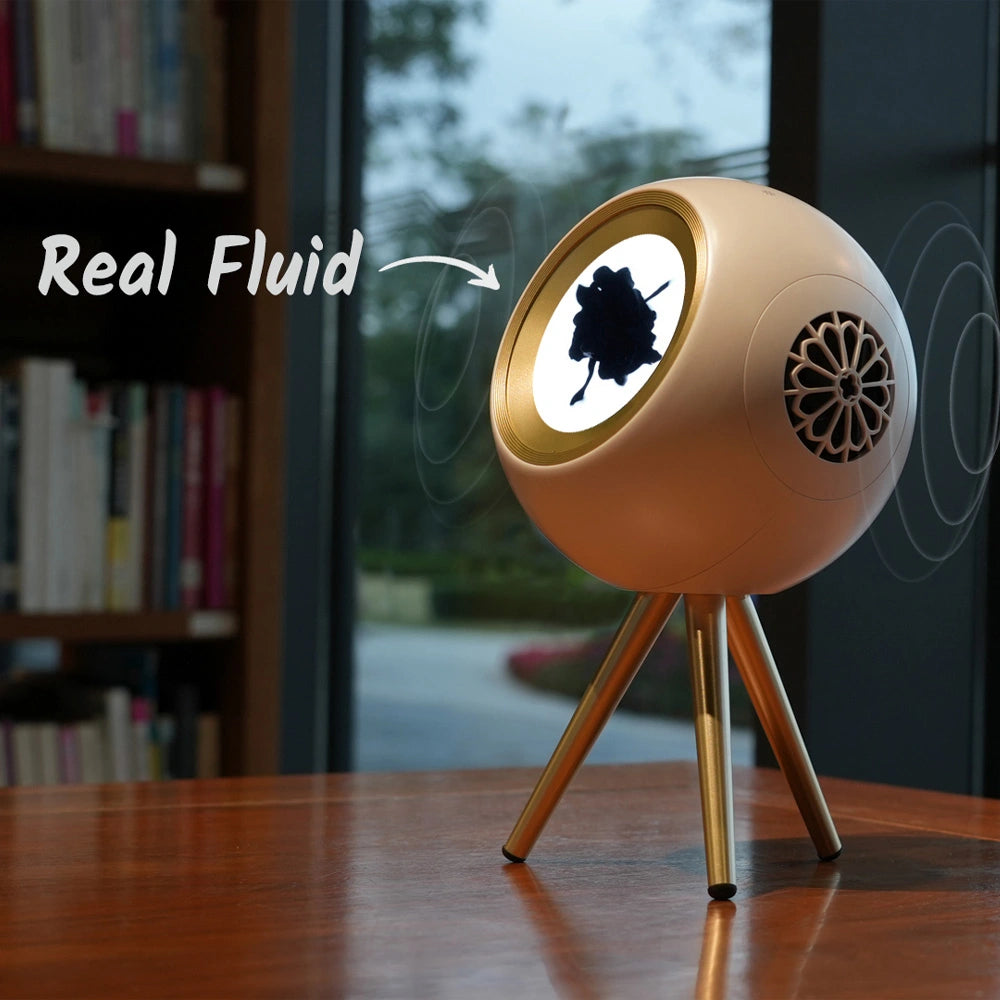 ↑ The Glowbe brings ferrofluid out of hiding — from internal engineering material to central visual feature
How Ferrofluid Improves Speaker Performance
Beyond thermal management, ferrofluid in a voice coil gap provides several additional performance benefits that audio engineers value:
- Distortion reduction: Ferrofluid provides mechanical damping to the voice coil's lateral movement — preventing the coil from scraping the gap walls at high excursion levels and reducing intermodulation distortion at high SPL.
- Power handling increase: By improving heat dissipation, ferrofluid-loaded speakers can handle 10–20% more sustained power than comparable designs without it, before thermal failure occurs.
- High-frequency response improvement: Ferrofluid's thermal coupling reduces the voice coil temperature gradient at high frequencies, maintaining more consistent impedance and frequency response during extended high-frequency program material.
- Longevity improvement: Reduced thermal stress translates directly to extended driver life — a significant engineering consideration for products expected to operate for years.
Ferrofluid selection for voice coil applications requires careful viscosity matching. Higher viscosity fluids provide better damping but increase mechanical resistance (Qms), affecting the speaker's transient response. Lower viscosity fluids provide less damping but better thermal conductivity. Speaker engineers balance these parameters against the target acoustic performance.
| Characteristic | Traditional Speaker | Glowbe Ferrofluid Speaker |
|---|---|---|
| Ferrofluid location | Voice coil gap (internal) | Sealed glass dome (external, visible) |
| Ferrofluid purpose | Thermal management, distortion control | Visual display, real-time audio visualization |
| Consumer visibility | Hidden — invisible | Central feature |
| Audio-fluid coupling | Passive — via mechanical vibration | Active — DSP-driven electromagnetic pulses |
| Visual output | None | Real-time music-reactive display |
| Ferrofluid formula | Viscosity-matched for coil gap | Smart NanoFluid — optimized for visual dynamics |
From Hidden Ingredient to Visual Star — The Glowbe Approach
The engineering insight behind the Glowbe is straightforward in concept, deeply sophisticated in execution: if ferrofluid is already in speakers for engineering reasons, what happens when you optimize it entirely for visual rather than thermal performance — and display it in a sealed glass dome at the front of the speaker?
The answer required solving several non-trivial engineering problems. The ferrofluid formula needed to be optimized for visual dynamics rather than viscosity-for-coil-gap — a different set of priorities (surface tension, contrast, spike definition, long-term stability in glass). The electromagnetic driving system needed to be separate from the speaker's audio driver, controlled by its own DSP signal chain rather than the passive acoustic system. And the glass dome needed to be sealed to laboratory standards to prevent any fluid degradation over years of use.

How the Onboard DSP Converts Audio to Electromagnetic Pulses
The Glowbe's audio-to-ferrofluid signal chain is a distinct engineering achievement. Here is the step-by-step process by which music becomes moving ferrofluid display:
Omnidirectional mic or Bluetooth/AUX input captures full-spectrum audio signal
DSP chip performs real-time frequency analysis — separating bass, mid, and high components
Frequency data converted to modulated electromagnetic pulses — latency under 1ms
Electromagnets drive Rosensweig instability in ferrofluid — spikes, waves, textures in real time
The critical engineering constraint is latency. The human eye can detect visual asynchrony with audio at approximately 50–100ms delay. The Glowbe's DSP-to-electromagnet pipeline operates at under 1ms — well within the imperceptible threshold, ensuring the ferrofluid display appears perfectly synchronized with the music rather than lagging behind it.
The DSP also performs a function analogous to a spectrum-to-space mapping: different frequency bands are assigned to drive different regions or intensities of the electromagnetic field around the glass dome. This creates spatial variation in the ferrofluid display — the fluid doesn't simply pulse uniformly, but shows complex, multi-modal responses that reflect the frequency structure of the music.
Frequency Response and Fluid Behavior — 65Hz to 13.5kHz
The Glowbe's 65Hz–13.5kHz frequency response is wide for a compact speaker of its dimensions, achieved through DSP processing that applies careful equalization and dynamic limiting to maximize usable frequency range. But from a ferrofluid display perspective, the frequency range also defines the visual vocabulary of the display:
Sub-bass to bass
Mid-range
High frequency
This frequency-to-behavior mapping means that music genres with strong bass content — electronic, hip-hop, cinematic orchestral — produce the most visually dynamic displays. But complex music with rich midrange content (jazz, vocal performances, acoustic instruments) produces displays of extraordinary organic complexity, with multiple wave modes interacting simultaneously across the ferrofluid surface.
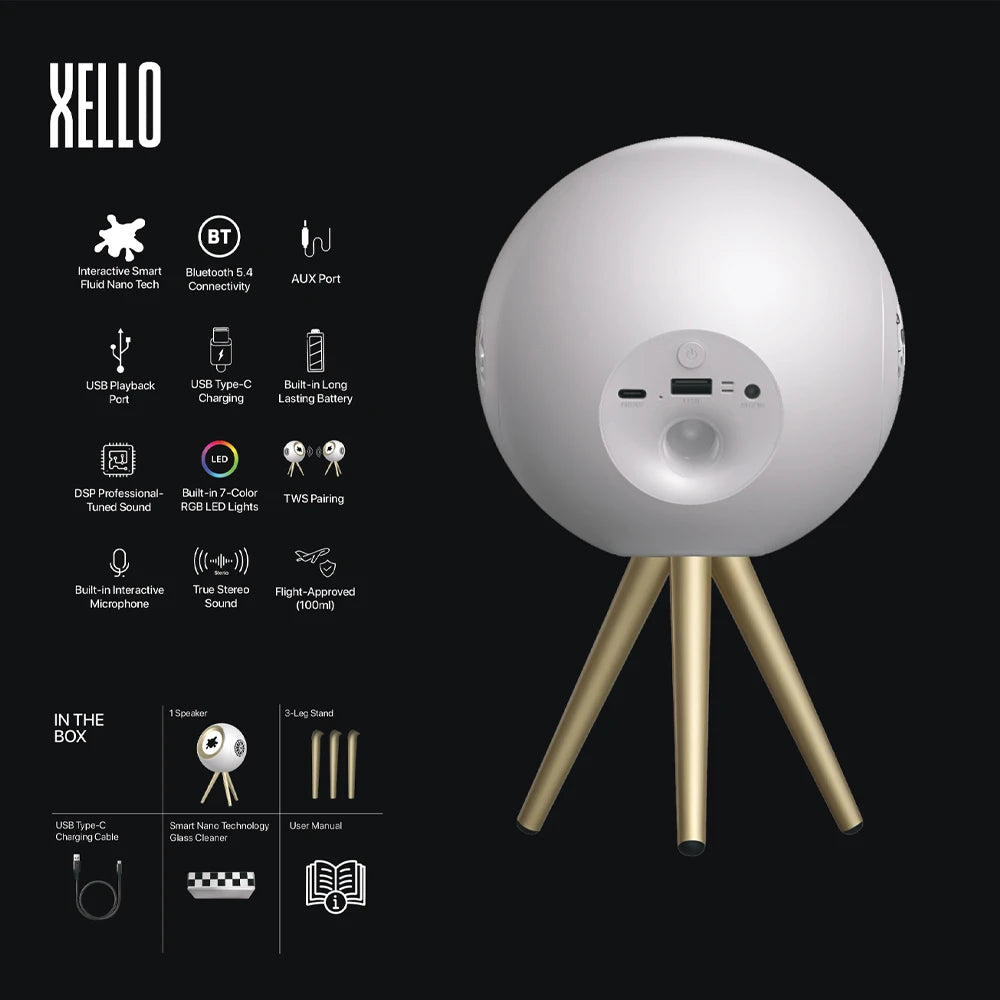
The complete Glowbe product specifications reflect this engineering balance between audio performance and ferrofluid display optimization:
Real-Time vs Pre-Programmed — Why Physics Beats Software
The ferrofluid audio visualizer market includes screen-based alternatives: products that display programmed animations of "ferrofluid-like" patterns on LED matrices or LCD screens, driven by audio input. These products share the visual concept but not the physical reality. Understanding the distinction explains why the Glowbe's engineering approach produces a categorically superior experience.
A programmed audio visualizer — regardless of how sophisticated the algorithm — is producing outputs from a finite library of pre-defined animations triggered by audio events. Even adaptive, machine-learning-driven visualizers are generating outputs determined by software state. The visual display is correlated with the music but not governed by it.
In the Glowbe, the music is the display. The electromagnetic field generated by the audio signal is the same field that sculpts the ferrofluid. There is no intermediary software layer translating "input audio" to "display output." The causal chain runs directly from acoustic energy to electromagnetic field to fluid physics — with no programmatic interpretation between them. This is why no two moments are ever identical and why the display feels genuinely responsive rather than performatively reactive.
This distinction has practical consequences. A programmed visualizer can only display patterns its software anticipated. The ferrofluid display responds to any sound, any frequency combination, any transient — however unprecedented or complex — because it is governed by fundamental physical laws that don't have edge cases. The display is, in a meaningful engineering sense, an analog computer whose output is governed by the laws of electromagnetism.
"360-degree immersive sound, better than other speaker collections. Works as portable outdoor speaker with its own battery."
"The dancing display is the best part — ferrofluid movement exactly as expected and very fun to watch."
The Glowbe also includes a strong magnet in the box — allowing manual manipulation of the ferrofluid without electricity. This hands-on interaction with the Rosensweig instability is one of the most direct experiences of physics available outside of a laboratory. You can explore the most unique desk accessories available today, but nothing else puts real physics in your hands quite like this.
Frequently Asked Questions
5 QuestionsExperience the Ferrofluid
Audio Visualizer
20W DSP-tuned audio, real ferrofluid display, Bluetooth 5.3, True Wireless Stereo. Ships free from California in 3–7 days.